Napoleon and Snowball rivalry
The rivalry between Napoleon and Snowball is the central political conflict of Animal Farm, a struggle for power and ideological direction that determines the fate of the farm. From the earliest days of the Rebellion, the two pigs clash over every major decision, with Snowball advocating for windmills, committees, and education while Napoleon maneuvers to consolidate absolute control, ultimately expelling his rival through violence and rewriting history to brand him a traitor.
Origins and Early Divergence
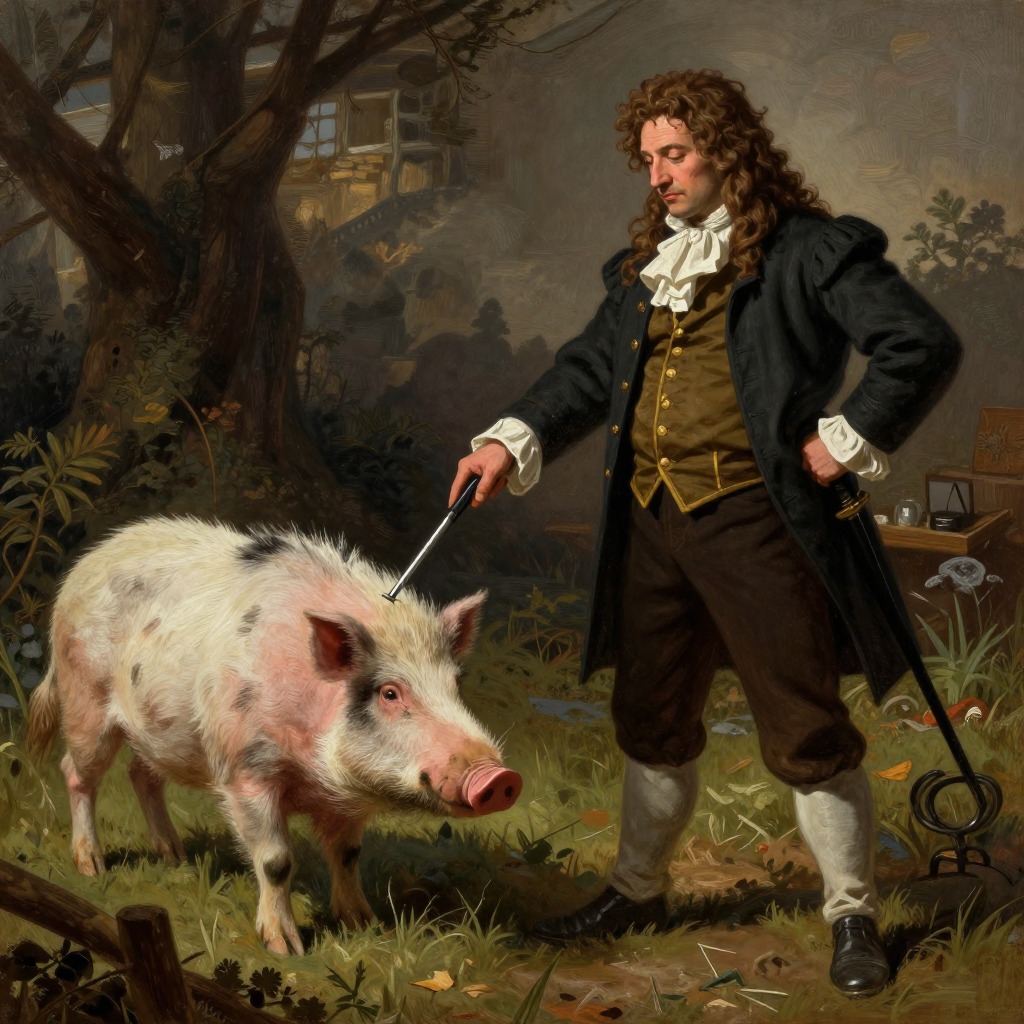
Napoleon and Snowball are introduced as the two pre-eminent pigs on the farm, both young boars whom Mr. Jones had been breeding up for sale. Napoleon is a large, rather fierce-looking Berkshire boar, not much of a talker but with a reputation for getting his own way. Snowball is more vivacious, quicker in speech and more inventive, though not considered to have the same depth of character. Together with Squealer, they elaborate old Major's teachings into a complete system of thought called Animalism. From the very beginning, however, the two are never in agreement: whatever suggestion either of them makes, the other can be counted on to oppose it. Even when it is resolved to set aside the small paddock behind the orchard as a home of rest for animals past work, there is a stormy debate over the correct retiring age for each class of animal. At the Sunday Meetings, Snowball often wins over the majority by his brilliant speeches, but Napoleon is better at canvassing support for himself in between times, especially among the sheep, who are liable to break into their bleating of "Four legs good, two legs bad" at crucial moments in Snowball's speeches.
The Windmill Dispute and the Expulsion
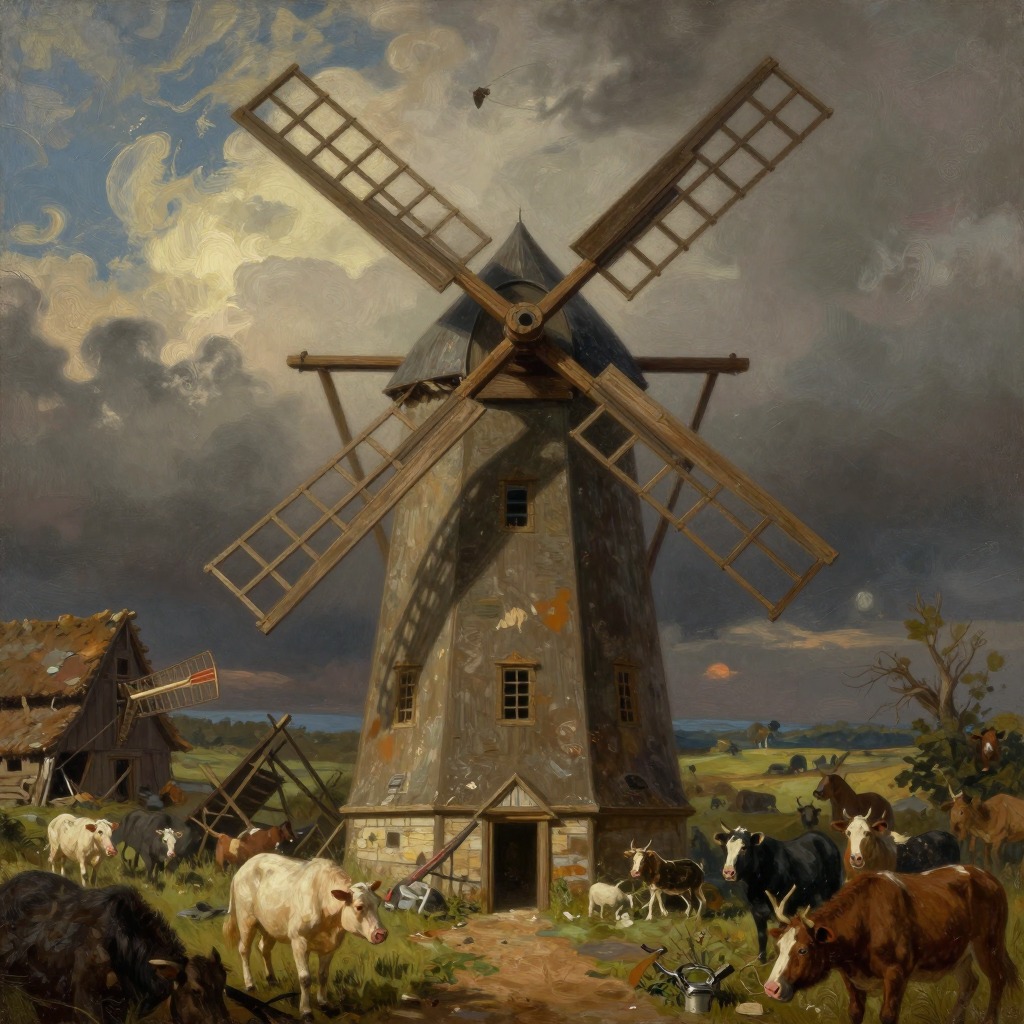
The most bitter of all their controversies is over the windmill. Snowball, after surveying the ground, declares that a small knoll near the farm buildings is the perfect place for a windmill that could operate a dynamo and supply the farm with electrical power, lighting the stalls, warming them in winter, and running a circular saw, a chaff-cutter, a mangel-slicer, and an electric milking machine. He works out the plans in the incubator shed, drawing with chalk on the smooth wooden floor, and the animals come to look at his drawings at least once a day. Napoleon holds aloof, declaring himself against the windmill from the start. One day he arrives unexpectedly, examines the plans, and then suddenly lifts his leg, urinates over them, and walks out without a word. The farm becomes deeply divided under the slogans "Vote for Snowball and the three-day week" and "Vote for Napoleon and the full manger." At the decisive Sunday Meeting, Snowball delivers a passionate appeal that carries the animals away, painting a picture of Animal Farm freed from sordid labour. But just as the vote is about to go in his favour, Napoleon stands up, utters a high-pitched whimper, and nine enormous dogs wearing brass-studded collars bound into the barn and dash straight for Snowball. He escapes through a hole in the hedge and is seen no more. Napoleon immediately announces the end of the Sunday-morning Meetings, declaring that all questions will be settled by a special committee of pigs presided over by himself. When four young porkers squeal in disapproval, the dogs growl and the sheep burst into a quarter-hour of bleating that puts an end to any discussion. Squealer is sent to explain that Napoleon had never really been opposed to the windmill; it was all a tactic to get rid of Snowball, who was a dangerous character and a bad influence. The plan, Squealer says, was actually Napoleon's own creation, stolen from among his papers.
The Rewriting of History
After Snowball's expulsion, Napoleon systematically rewrites history to transform his rival into a villain. When the windmill is destroyed in a storm, Napoleon blames Snowball, roaring that the traitor crept in under cover of night and destroyed their work. He pronounces the death sentence upon Snowball, offering half a bushel of apples to any animal who brings him to justice and a full bushel to anyone who captures him alive. Footprints of a pig are discovered and pronounced to be Snowball's. Later, Squealer announces that Snowball has sold himself to Frederick of Pinchfield Farm and was in league with Jones from the very start, acting as Jones's secret agent all along. When Boxer protests that Snowball fought bravely at the Battle of the Cowshed, Squealer explains that the wound was part of the arrangement and that it was Napoleon who saved the day. The animals, confused, eventually accept that if Napoleon says it, it must be right. Snowball is blamed for every misfortune: stolen corn, upset milk-pails, broken eggs, trampled seedbeds, gnawed bark, and even the rats' troublesome behaviour. Napoleon makes a tour of inspection, snuffing the ground for traces of Snowball's footsteps, which he claims he can detect by smell, and finding them almost everywhere. The animals come to see Snowball as an invisible, menacing presence. During the purge, four pigs confess to having been secretly in touch with Snowball, collaborating with him to destroy the windmill and plotting to hand over the farm to Frederick; they are torn to pieces by the dogs. Three hens confess that Snowball appeared to them in a dream and incited them to disobey Napoleon's orders; they too are slaughtered. A goose confesses to having secreted corn under Snowball's influence, and sheep confess to murdering an old ram at his urging. All are slain on the spot. The Sixth Commandment, which originally read "No animal shall kill any other animal," is later found to have been altered to "No animal shall kill any other animal WITHOUT CAUSE," justifying the executions. The Fifth Commandment, "No animal shall drink alcohol," is similarly altered to "No animal shall drink alcohol TO EXCESS." Snowball's role in the Battle of the Cowshed is further distorted: it is given out that he was not decorated with "Animal Hero, First Class" but censured for cowardice, and later that he was actually fighting on Jones's side, charging into battle with the words "Long live Humanity!" on his lips, his wounds inflicted by Napoleon's teeth. By the end, Snowball is forgotten by all but a few, and the farm's history has been entirely rewritten to serve Napoleon's narrative.